
Despite the economic crisis due to the coronavirus pandemic, as well as the decline in production and sales, the market for gas sensors continues to grow. Toshihiro Udaka became the President and Director of the Japanese corporation FIGARO in April of 2020 and since then the company has been focused on producing sensors of combustible and explosive gases. In addition, in connection with this pandemic, new trends have emerged that increased the demand for oxygen and air quality detectors from FIGARO, namely:
- in respirators with built-in oxygen sensors, which are also used in ventilators;
- in exhaled virus detectors that use an air quality sensor.
1. Methane and hydrogen leak sensor TGS8410, manufactured by MEMS technology in the TO-5 case (see Fig. 1), which was announced by FIGARO in 2013, after a series of tests and search for optimal production capacity is finally waiting for the start of its serial production in October 2021.
Due to its high durability and stability, TGS8410 methane sensor is ideal for such applications as portable gas detectors and sensors with autonomous power supply, including methane leakage monitoring at gas pipelines and gas stations. The new sensor makes it possible to develop a methane detector that can reliably operate for about 5 years from just one lithium battery with a voltage of 2.8 V and a capacity of 2400 mA / h.
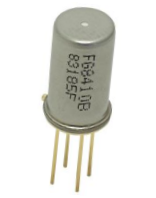
Fig. 1. Appearance of the TGS8410 sensor
2. New FCM2630 module with TGS2630 sensors (see Fig. 2) is used to control the leakage of refrigerant R32 in cooling systems and air conditioners. It will have a factory calibration for measuring freon leakage, temperature compensation scheme, resistance to interference gases, compact design and compliance with IEC60335-2-40 and JRA4068. The FCM2630 module will be available in two versions: FCM2630-C01 (analog output) and FCM2630-E00 (digital output).
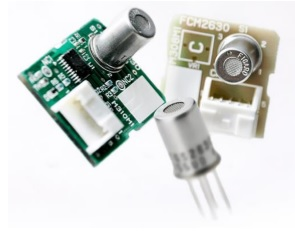
Fig. 2. Appearance of FCM2630 modules with TGS2630 sensors
3. To measure the level of acetone concentration, FIGARO proposes to use their new thermocatalytic sensor TGS1820 and the EM1820 module (see Fig. 3).
| Features of the TGS1820 sensor: | Application: |
|
|
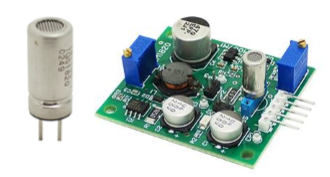
Fig. 3. Appearance of the TGS1820 sensor and the EM1820 module
4. Recently FIGARO has mastered the production of a new electrochemical oxygen sensor KE-25LF using lead-free technology with galvanic cell type (see Fig. 4). Main advantages of the new sensor include lead-free technology of production that complies with the RoHS2 directive, no need for an external power supply, rapid response to changes in oxygen concentration, lack of sensitivity to CO2, H2S and SO2, and the fact that there is no preheating time.
| Main characteristics of KE-25LF sensors with galvanic cell type: | Electrochemical oxygen sensors are used in the development and production of: |
|
|
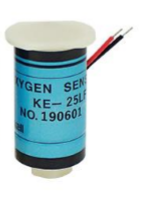
Fig. 4. Appearance of the oxygen sensor KE-25LF

SEA Company is the official distributor of FIGARO products in Ukraine. To buy sensors or get any additional information, please contact the electronic components department of SEA Company by phone: +38 (044) 330-00-88 or send a request via e-mail: info@sea.com.ua.